
Prayer in Islam: Complete Guide to Salah for Beginners
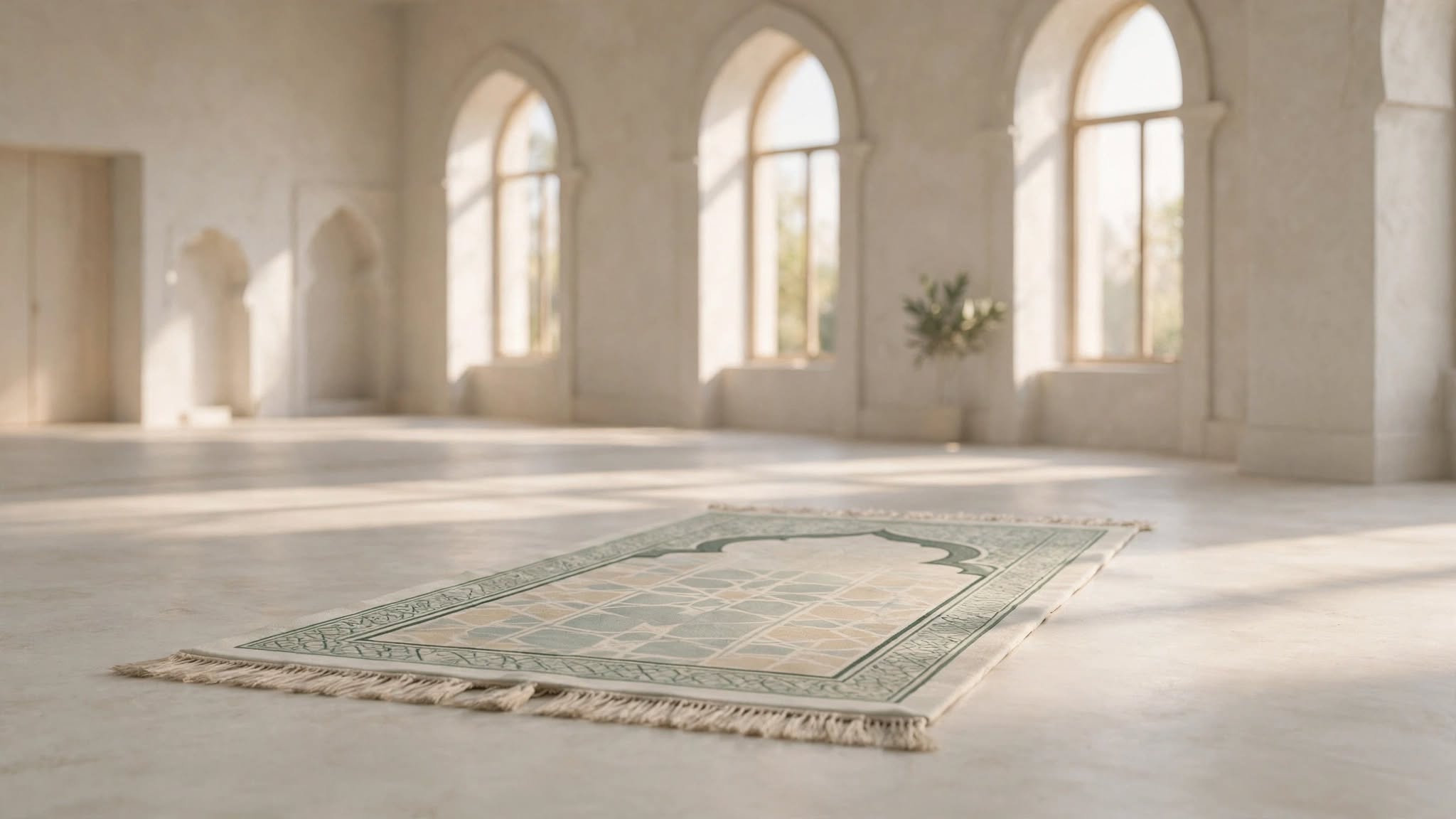
Prayer in Islam, known as Salah or Salat, is one of the most important acts of worship for Muslims. Muslims perform five obligatory prayers every day as a direct act of worship and remembrance of Allah.
For beginners, learning Salah may seem difficult at first. However, prayer follows a clear structure that becomes easier with practice. This guide explains the five daily prayers, their rak'ahs, prayer times, wudu, the basic steps of Salah, and common mistakes.
What Is Prayer in Islam?
Prayer, or Salah, is the formal act of worship performed by Muslims at specific times throughout the day and night. It includes standing, reciting Quran, bowing, prostrating, and sitting in a prescribed sequence.
Salah is not simply a physical exercise. It is an important opportunity for Muslims to remember Allah, seek guidance, express gratitude, and maintain a strong connection with their Creator.
The five daily prayers are obligatory for adult Muslims who meet the conditions of obligation. They are performed facing the Qiblah, the direction of the Ka'bah in Makkah.
Why Is Salah Important in Islam?
Salah has a central place in Islamic worship. It is one of the Five Pillars of Islam and is performed every day at appointed times.
Regular prayer helps Muslims establish a daily routine of worship and remembrance. It also provides repeated opportunities during the day to pause, reflect, and turn to Allah.
The Quran emphasizes the importance of establishing prayer, and Muslims have practiced the five daily prayers throughout Islamic history.
The 5 Daily Prayers in Islam
Muslims perform five obligatory prayers each day. Each prayer has a specific time and a specific number of obligatory rak'ahs.
The obligatory prayers total 17 fard rak'ahs each day. Muslims may also perform additional Sunnah and voluntary prayers.
Prayer Times in Islam
Each of the five daily prayers has its own appointed time. The exact clock time changes depending on the location and season.
- Fajr: begins at dawn and ends before sunrise.
- Dhuhr: begins after the sun passes its zenith.
- Asr: takes place in the afternoon and ends before sunset.
- Maghrib: begins immediately after sunset.
- Isha: begins after twilight disappears and continues during the night.
Because prayer times depend on geographical location and the position of the sun, Muslims normally use a reliable local prayer timetable or prayer application to determine the exact times.
How to Pray Salah: Basic Steps for Beginners
The details of Salah include several required and recommended actions. The following is a simplified overview for someone beginning to learn prayer.
- Make the intention to perform the particular prayer.
- Stand facing the Qiblah when able.
- Begin the prayer with Takbir.
- Stand and recite the required Quranic recitation, including Surah Al-Fatihah.
- Perform Ruku', the bowing position.
- Return to the standing position.
- Perform Sujud, prostration, twice during each rak'ah.
- Complete the required number of rak'ahs.
- Sit for the required testimony and supplications.
- Finish the prayer with Taslim, turning the head to the sides.
The exact details of some prayer positions and recitations can differ between Islamic schools of jurisprudence. Beginners should learn the practical details from a qualified teacher.
How Many Rak'ahs Are in Each Prayer?
A rak'ah is one complete unit of prayer. The number of obligatory rak'ahs differs between the five daily prayers.
- Fajr: 2 obligatory rak'ahs
- Dhuhr: 4 obligatory rak'ahs
- Asr: 4 obligatory rak'ahs
- Maghrib: 3 obligatory rak'ahs
- Isha: 4 obligatory rak'ahs
In addition to these obligatory rak'ahs, Muslims may perform Sunnah and other voluntary prayers according to their practice.
What to Say During Salah
Salah includes specific Arabic words and Quranic recitations. A beginner normally learns them gradually while learning the movements of prayer.
Among the important parts of the prayer are:
- Takbir: declaring the greatness of Allah.
- Surah Al-Fatihah: recited during the standing portion of prayer.
- Quranic recitation: additional Quran may be recited in appropriate rak'ahs.
- Ruku' remembrance: supplications are made while bowing.
- Sujud remembrance: supplications are made while prostrating.
- Tashahhud: recited while sitting during the prayer.
- Salawat: prayers and blessings upon Prophet Muhammad ﷺ.
- Taslim: used to conclude the prayer.
Learning the Arabic pronunciation correctly is especially important for new Muslims and children who are beginning to learn Salah.
Wudu Before Prayer
Before performing Salah, Muslims generally need to be in a state of ritual purity. Wudu is the prescribed minor ablution performed with clean water.
A basic outline of wudu includes:
- Making the intention for purification.
- Washing the hands.
- Rinsing the mouth and nose.
- Washing the face.
- Washing the arms including the elbows.
- Wiping the head and ears.
- Washing the feet including the ankles.
The detailed rulings and sequence can vary in some matters between schools of Islamic jurisprudence, so beginners may benefit from learning wudu from a qualified teacher.
Conditions of Salah: What Makes Prayer Valid?
Before praying, Muslims should fulfill the conditions required for valid Salah. These generally include matters such as:
- Being within the correct prayer time.
- Having the required state of ritual purity.
- Ensuring the body, clothing, and place of prayer meet the requirements of cleanliness.
- Covering the required parts of the body.
- Facing the Qiblah when able.
- Having the intention to perform the prayer.
The exact rulings may differ in details according to the school of jurisprudence, so Muslims should consult a qualified scholar when they have specific questions about validity.
Common Salah Mistakes and How to Avoid Them
Beginners often make small mistakes while learning prayer. These usually improve with regular practice and guidance.
- Rushing the prayer: take enough time to perform each position properly.
- Incorrect pronunciation: learn important Arabic recitations from a qualified teacher.
- Forgetting the number of rak'ahs: practice each prayer regularly until the sequence becomes familiar.
- Not learning prayer times: use a reliable local prayer timetable.
- Skipping wudu requirements: learn the basic rules of purification.
- Losing focus: remember that Salah is an act of worship and try to maintain concentration.
What If You Miss a Prayer?
Sometimes a person may miss a prayer because of sleep, forgetfulness, or another circumstance. The appropriate ruling can depend on the reason and the circumstances.
If you miss a prayer, do not simply give up on maintaining your Salah. Seek reliable Islamic guidance about what you should do and continue observing the remaining prayers.
For detailed rulings about intentionally missed prayers or specific circumstances, it is best to ask a qualified Islamic scholar because different situations have different rulings.
Teaching Children to Pray in Islam
Teaching children Salah is an important part of Islamic education. Children usually learn better when prayer is introduced gradually and positively.
Parents can help children by:
- Teaching the meaning and importance of prayer in an age-appropriate way.
- Practicing wudu together.
- Teaching short prayer recitations step by step.
- Allowing children to observe adults praying.
- Encouraging consistency without making learning unnecessarily stressful.
- Using qualified Quran and Arabic teachers when additional support is needed.
For children learning Quran and Salah online, a patient teacher can help improve Arabic pronunciation, Quran recitation, and confidence.
Prayer in Islam: Quick Summary
Salah is one of the central acts of worship in Islam. Muslims perform five obligatory prayers every day: Fajr, Dhuhr, Asr, Maghrib, and Isha.
Learning prayer involves understanding its times, rak'ahs, movements, recitations, purification requirements, and basic conditions. Beginners should learn gradually and seek qualified guidance when they are unsure about a specific ruling.
With regular practice, learning Salah becomes easier and more natural. Parents can also introduce children to prayer gradually and encourage them to develop a positive relationship with worship.
📚 Explore Our Salah Guides
Continue learning with our detailed guides about Salah, prayer times, Wudu, rak'ahs, and common prayer questions:
- How to Pray Salah: Step-by-Step Guide
- 5 Daily Prayers in Islam: Names, Times & Rak'ahs
- Prayer Times in Islam: Fajr, Dhuhr, Asr, Maghrib & Isha
- How Many Rak'ahs Are in Each Prayer?
- What to Say in Salah: Prayer Recitation Guide
- How to Make Wudu: Step-by-Step Guide
- Conditions of Salah: What Makes Prayer Valid?
- Common Salah Mistakes and How to Correct Them